Where Veterinary Insight Meets Practical Feeding

Where Veterinary Insight Meets Practical Feeding

A Voice That Has Earned Its Authority

Dr. Karen Hayes is a 1979 graduate of the University of Illinois College of Veterinary Medicine and one of the most respected educational voices in modern horse care. She has written hundreds of articles for Equus, Dressage Today, Practical Horseman, Modern Horse Breeding, Stable Management, and Horse & Rider, where she serves as a contributing editor.

Her seven horse-care books are known for being practical, direct, and grounded in real-world application. They are not theoretical manuals. They are working guides for responsible owners.

Dr. Hayes does not accept paid endorsements. She does not recommend products lightly. For years, she has tested horse care methods, equipment, and management systems before ever speaking publicly about them on her nationwide lecture circuit.

Stable Grazer is one of the select few products she has chosen to feature.

In How to Be the Perfect Horsekeeper — Book Two in her Perfect Stall series — she calls the Stable Grazer automatic hay feeder “The Perfect Way To Feed A Stabled Horse.”

That distinction was earned through evaluation, not marketing.

Featured in Dr. Hayes’ Books

The Perfect Stall
A practical blueprint for building healthier, more thoughtful stable environments.

How to Be the Perfect Horsekeeper
(Book Two in the Perfect Stall Series)
The hands-on guide where Stable Grazer is recognized as an ideal feeding solution for stalled horses.

These books reinforce a simple principle: management choices matter. And feeding rhythm sits at the center of those choices.

The Principle: How and When Matter

Dr. Hayes frequently emphasizes a truth supported by academic research, including work from the University of Kentucky’s College of Agriculture:

“How and when a horse is fed may be just as important as what a horse is fed.”

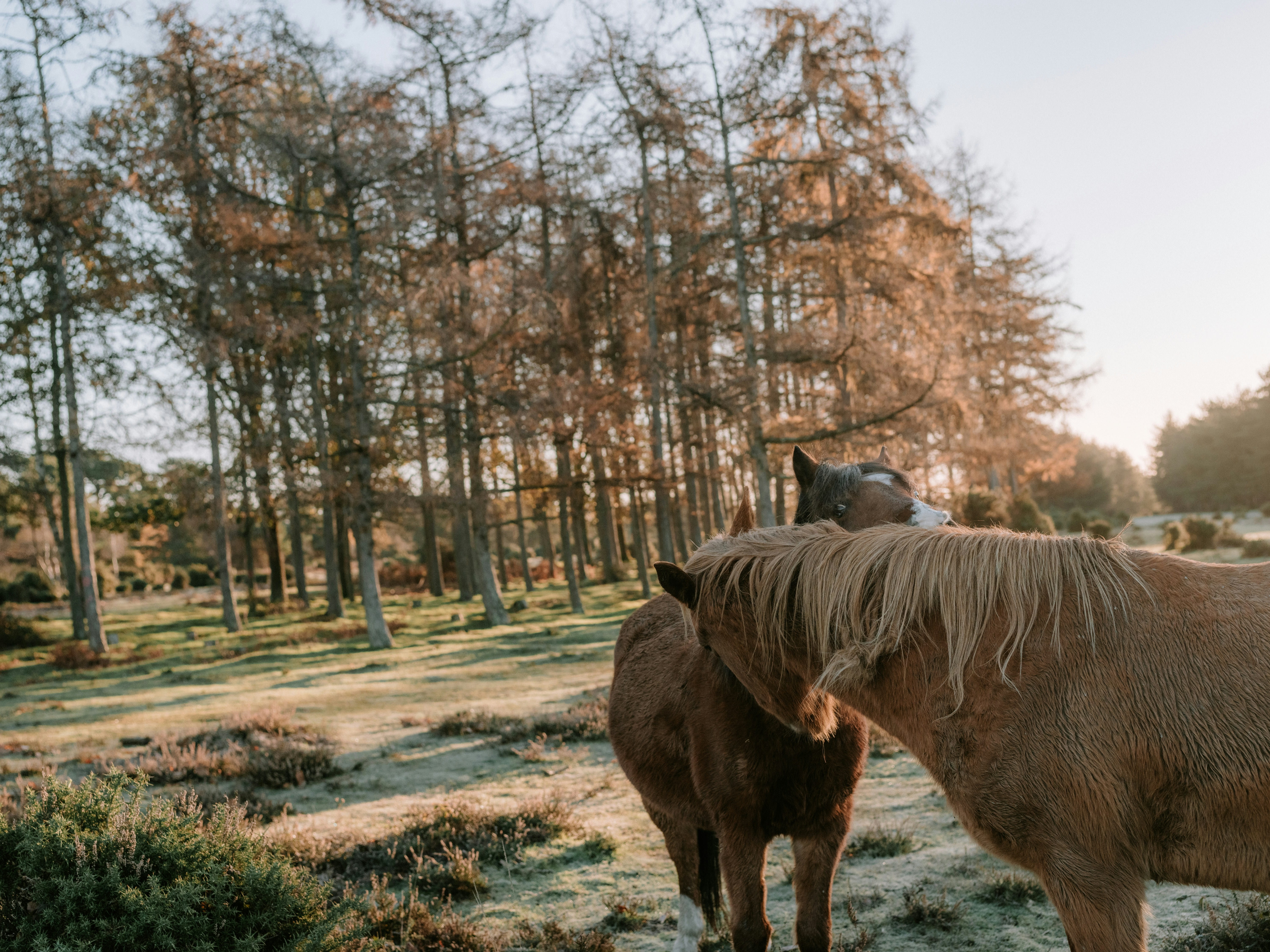
In their natural state, horses may spend up to 60% of their time eating. Grazing and resting periods are interspersed so that eating rarely stops for more than two or three hours at a time. This rhythm supports digestive motility, acid buffering, and behavioral balance.

Modern management often disrupts that pattern. Many horses are fed twice daily, confined to stalls or limited paddocks, with long hours between meals. During those gaps, the digestive system continues working. Acid production does not stop. Anticipation builds. Stall behaviors intensify.

These outcomes are not personality issues. They are structural consequences.

Bridging Knowledge and Daily Execution

Understanding feeding science is one thing. Applying it consistently is another.

Individual feeding systems provide precision but demand time and labor. Group feeding may reduce labor but limit customization. Busy schedules make ideal grazing intervals difficult to maintain.

Stable Grazer was developed to bridge that gap between veterinary principle and practical implementation. By dispensing smaller, timed portions throughout the day, it supports more natural intake patterns without requiring constant human presence.

It reinforces what research confirms.
It aligns with how horses are designed to eat.
And it brings structure to one of the most influential variables in equine health.

This is not about convenience alone. It is about responsibility supported by engineering.

A Voice That Has Earned Its Authority

Dr. Karen Hayes is a 1979 graduate of the University of Illinois College of Veterinary Medicine and one of the most respected educational voices in modern horse care. She has written hundreds of articles for Equus, Dressage Today, Practical Horseman, Modern Horse Breeding, Stable Management, and Horse & Rider, where she serves as a contributing editor.

Her seven horse-care books are known for being practical, direct, and grounded in real-world application. They are not theoretical manuals. They are working guides for responsible owners.

Dr. Hayes does not accept paid endorsements. She does not recommend products lightly. For years, she has tested horse care methods, equipment, and management systems before ever speaking publicly about them on her nationwide lecture circuit.

Stable Grazer is one of the select few products she has chosen to feature.

In How to Be the Perfect Horsekeeper — Book Two in her Perfect Stall series — she calls the Stable Grazer automatic hay feeder “The Perfect Way To Feed A Stabled Horse.”

That distinction was earned through evaluation, not marketing.

Featured in Dr. Hayes’ Books

The Perfect Stall
A practical blueprint for building healthier, more thoughtful stable environments.

How to Be the Perfect Horsekeeper
(Book Two in the Perfect Stall Series)
The hands-on guide where Stable Grazer is recognized as an ideal feeding solution for stalled horses.

These books reinforce a simple principle: management choices matter. And feeding rhythm sits at the center of those choices.

The Principle: How and When Matter

Dr. Hayes frequently emphasizes a truth supported by academic research, including work from the University of Kentucky’s College of Agriculture:

“How and when a horse is fed may be just as important as what a horse is fed.”

In their natural state, horses may spend up to 60% of their time eating. Grazing and resting periods are interspersed so that eating rarely stops for more than two or three hours at a time. This rhythm supports digestive motility, acid buffering, and behavioral balance.

Modern management often disrupts that pattern. Many horses are fed twice daily, confined to stalls or limited paddocks, with long hours between meals. During those gaps, the digestive system continues working. Acid production does not stop. Anticipation builds. Stall behaviors intensify.

These outcomes are not personality issues. They are structural consequences.

Bridging Knowledge and Daily Execution

Understanding feeding science is one thing. Applying it consistently is another.

Individual feeding systems provide precision but demand time and labor. Group feeding may reduce labor but limit customization. Busy schedules make ideal grazing intervals difficult to maintain.

Stable Grazer was developed to bridge that gap between veterinary principle and practical implementation. By dispensing smaller, timed portions throughout the day, it supports more natural intake patterns without requiring constant human presence.

It reinforces what research confirms.
It aligns with how horses are designed to eat.
And it brings structure to one of the most influential variables in equine health.

This is not about convenience alone. It is about responsibility supported by engineering.

Standards, Not Sponsorships

Dr. Hayes’ work is guided by one standard: what improves horse welfare in measurable, sustainable ways.

Stable Grazer was not selected because of marketing claims. It was chosen because it addresses a foundational issue in modern management — feeding rhythm. When veterinary research, academic guidance, and durable equipment align, the result is clarity.

Feeding management shapes digestion, metabolism, behavior, and long-term soundness. It is not an afterthought. It is infrastructure.

And infrastructure should be built with intention.

The Smarter Way to Feed

All of these challenges — digestive stress, feeding anxiety, hay waste, labor demands — point back to one thing: structure.

Horses and livestock are designed to consume small amounts over time. But most feeding systems rely entirely on human availability. Two large meals. Long gaps. Rushed schedules. Weather interruptions. Staffing changes.

Biology stays consistent. Management doesn’t.

Stable Grazer was built to close that gap.

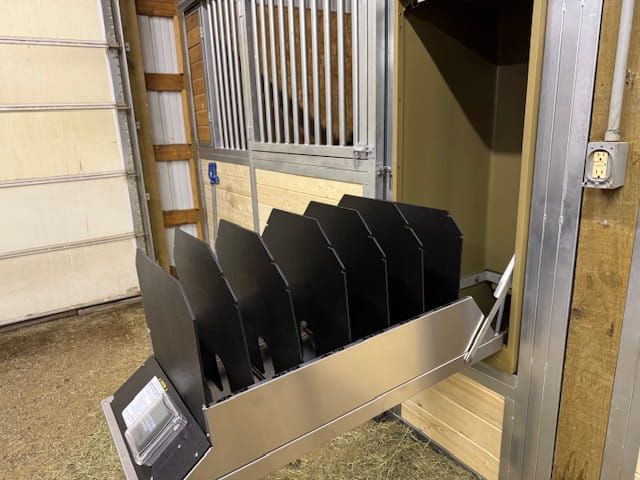
Our patented automatic feeding systems deliver small, timed portions throughout the day, mimicking natural grazing patterns even in stalls, dry lots, barns, or custom enclosures. Instead of dumping forage and hoping it lasts, you control when and how much is released.

That shift changes everything.

• Reduced long fasting periods

• More consistent intake

• Less rapid gorging

• Decreased hay waste

• Lower daily labor demands

• Greater peace of mind

Constructed from stainless steel and manufactured in the United States, Stable Grazer systems are built for real-world conditions — extreme weather, heavy use, and working facilities. From private horse owners to large-scale operations and federal units, the goal remains the same: healthier animals with less waste and less stress.

This isn’t about replacing good management.

It’s about reinforcing it with reliable structure.

When feeding becomes programmable, consistent, and durable, you’re no longer reacting to problems. You’re preventing them.

Stable Grazer — the smarter way to feed your animals.
More to read

Background Image (Decorative)

Need a Custom Feeding Solution?

Every operation is different. Whether you need a modified size, unique configuration, or a completely custom build, our team will work with you to design a feeder that fits your exact needs.

Background Image (Decorative)

Need a Custom Feeding Solution?

Every operation is different. Whether you need a modified size, unique configuration, or a completely custom build, our team will work with you to design a feeder that fits your exact needs.

Background Image (Decorative)

Need a Custom Feeding Solution?

Every operation is different. Whether you need a modified size, unique configuration, or a completely custom build, our team will work with you to design a feeder that fits your exact needs.

Background Image (Decorative)